

At half past six o'clock last evening [February 21st, 1917] the Luton Borough Tribunal came to a startling decision. It transpired that Lieut Gardner purposed taking every case where conditional exemption was granted by the local Tribunal to men under 31 years of age to the Appeal Tribunal, and the question promptly arose: "What then is the locus standi of the local Tribunal?"
The Mayor and Deputy Mayor (Alderman J. H.Staddon and Councillor W. J. Primett) took a very decided attitude. The former declined to waste hours in deciding cases on their merits if every case was to be taken to the Appeal Tribunal.
The latter challenged Lieut Gardner's special instructions to thus take every case to the Appeal Tribunal, and asked for the production of these instructions. Lieut Gardner replied that was impossible as the instructions were confidential.
The Town Clerk (Mr William Smith): "To take every case irrespective of right or wrong is too absurd for words. It is a very serious question, and concerns the liberty of the subject. It certainly is no use wasting time in going through every detail if the Tribunal is to have no discrimination. It becomes a perfect farce, and I would suggest that you confirm all you previous decisions and let them go on to the Appeal Tribunal."
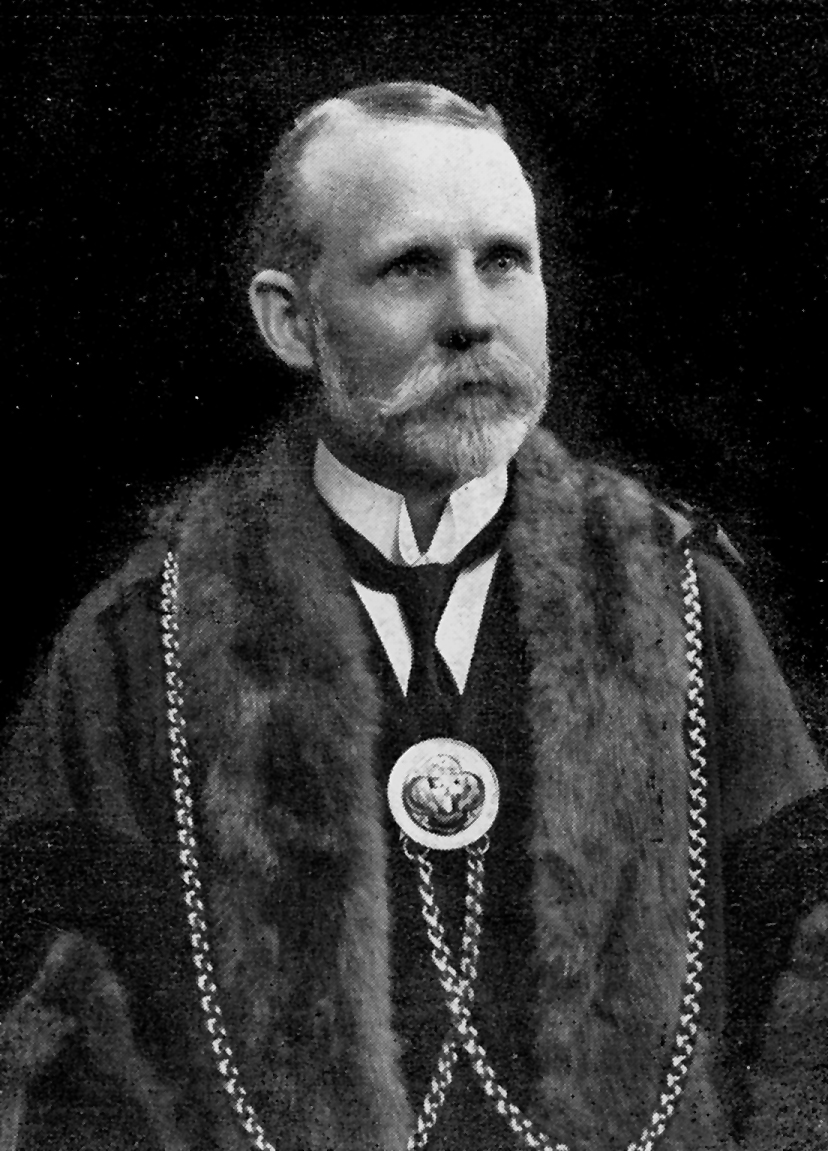 Councillor Primett (pictured right while Mayor): "I shall refuse to sit here is this sort of thing is going on. With all respect to Mr Gardner, it is tantamount to a threat."
Mr Gardner: "I should like not to be misunderstood..."
Councillor Primett: "You say you have instructions to take all these cases to the Appeal Tribunal."
Mr Gardner: "All military representatives have received these instructions so far as men under 31 years are concerned. We have them with regard to the singles and also as to the new list of certified occupations."
Councillor Primett: "In fairness to the Tribunal, I want you to produce these instructions." Mr Gardner: "Of course, that is impossible. They are confidential."
Councillor Primett: "Then I challenge it. We are a public Tribunal trying to do our duty. To be held up in this sort of way, I think is an insult to us. This is not child's play. It takes it out of one to sit at these Tribunals hour after hour, and to give the best of one's time and ability, and then to have this threat held over one. I think the County Tribunal had better decide the lot in such circumstances, and I suggest we adjourn sine die and ask for those instructions."
The Town Clerk: "If every appeal was taken on its merits, I would not raise any objection, but when he says he is going to appeal in every case - I won't say it is a threat, but I say it is going beyond the Act of Parliament. Parliament has said that every man of a certain age is to go into the Army, but it has also said that every man shall have the right to lodge an application for exemption if there are reasonable grounds for such exemption."
Lieut Gardner: "And if the Military Representative is not satisfied...?"
The Town Clerk: "The Act does not say that. It means you will be trying to force every man into the Army irrespective of right or wrong. That is the logical conclusion. To say 'in every case' is utterly repugnant."
Lieut Gardner: "Those are my instructions."
The Town Clerk: "If there is to be an appeal in every case, don't let us waste your time or ours, just because the Tribunal does not agree with the military representative. It is a very serious proposition I might add the military representative can do more in these courts than an ordinary legal gentleman is permitted in ordinary courts. A lawyer has to hold his tongue sometimes."
The Mayor: "Personally, I don't agree to it, and to submit to it I am not prepared. It is against all common justice."
Councillor Primett: " It is any good for us to go on at all, if every case in which we grant conditional exemption is to be carried to the Appeal Tribunal? In that case we have no locus standi at all. I think we had better adjourn to consider our position. I shall absolutely refuse to sit here on such terms."
The Town Clerk intimated they knew the facts and were presumed to be able to come to a sensible and logical conclusion on each case on its merits.
Alderman H. O. Williams: "I don't think we are at liberty to shut up food-producing businesses." Lieut Gardner: "I shall carefully reconsider such cases before carrying them forward."
The Mayor: "I am going on a principle, not on one particular class of business, and I protest against the attitude Mr Gardner has taken up, on behalf of my colleagues and myself. What is the use for us to sit here for hours if the Appeal Tribunal is to decide whether these men shall remain in their occupations or not? The only alternative, it seems to me, is to pass all these reconsideration cases en bloc, and let the Appeal Tribunal deal with them."
The Town Clerk said he was averse to the Tribunal going on strike, and should cease to be associated with one that took that course. Of course, they could adjourn the sittings of the Tribunal for three months, but he could not advise that policy.
Lieut Gardner: "That would be tantamount to granting temporary exemption. I would rather you force it to an issue if you think you ought to."
Councillor Primett: "I challenge the instructions, and ask for them to be produced." Lieut Gardner: "They are marked 'confidential'."
The Mayor: "I think this Tribunal had better stand adjourned until next Wednesday."
The Town Clerk: "We have been very careful to be fair and not to do anything which would interfere with putting a man into the Army, but some of these men must be left."
The Mayor: "We will adjourn until a fortnight today at 5.30." Lieut Gardner: "I am very sorry..."
The Mayor: "I have done my level best to work with you, and to the best of my ability and that of my colleagues, but we are driven now into a position which I think has become a serious pass. I don't like it, and I am not prepared to accept it."
Lieut Gardner: "It is very unfortunate. I quite endorse what you say. We have worked very well together, but I feel I have my duty to do in accordance with instructions."
The Mayor: "I am not prepared to accept that this Tribunal shall be made a nonentity. We have tried to do our duty faithfully."
Mr Webb: "I am quite sure Mr Gardner is carrying out his duty as he conceives it to be his duty, but would it be possible to ascertain whether that is really the intention of his instructions?"
Lieut Gardner: "I am not at liberty to produce my instructions. I will immediately put this matter before Bedford and see if I can have further instructions."
The Town Clerk: "That is raising another point. Then the instructions you have received have not come from the War Office?" Lieut Gardner: "Of course, we have no direct communication with the War Office."
The Mayor (to the Assistant Clerk): "Inform the applicants there will be no more cases tried tonight." Lieut Gardner: "I am very sorry it should come to this pass."
The Mayor: "A very serious principle is involved. I object to our being let down to the position of a mere nonentity, and I for one will not waste any more time on the matter."
Lieut Gardner: "I cannot for the moment see any solution. I will communicate with the authorities."
Councillor Primett: "Bring those instructions along. Those are what we want." Lieut Gardner: "That is impossible."
The Town Clerk: "I am glad the question has arisen now, for we have reached the very serious cases."
Councillor Primett: "And I am glad we have such a strong Tribunal tonight, and that we are all of one mind. There is no pique about the matter. It is a question of right and justice."
The Town Clerk: "It is not a question as between the local and the Appeal Tribunal. The call is only for men who can be spared without serious detriment to work of national importance. Then this Tribunal not stands adjourned until this day fortnight at 5.30, so that the military representative may communicate with headquarters on the principle that the local Tribunal objects to every case in which conditional exemption is granted being taken to the Appeal Tribunal."
[The Luton News: Thursday, February 22nd, 1917]